

HONEY, I SHRUNK OUR GOD
Saint Paul’s letter to the Romans is the pinnacle of his theology and the view from chapter 8 is out of this world.
Who will separate us from the love of God? he asks, and then lists a series of calamities that cannot get in the way. Poverty, trauma, oppression, hunger, natural disasters, crime and war, to reinterpret his wording, are unable to drive a wedge between us and God’s love. It is all the more striking because St Paul experienced most of these personally. That kind of brutalisation makes it harder to feel the love of God, not least because God’s love is most prominently expressed through other people. That Paul could say this speaks of an extraordinary, logic and emotion defying divine love.
Having dismissed the stuff that might separate us from God’s love on earth, he turns his mind to what we would prosaically call the big picture but which Paul understood as the cosmic powers. Some of these we know: things present, life and death. Others we know about: angels and the things to come. Still others we know even less about: what are the ‘powers’ that St Paul cryptically refers to throughout his writings? There is a realm we know so little about, and I think Paul would argue, don’t need to know about because God has taken care of them for us.
But there is another realm that causes us problems, and that’s the human mind. The brain is, when you think about it, the most complex known component of the universe, full of depths we barely understand even with the gift of neuroscience. It is therefore not surprising that we sometimes find some unwelcome surprises in its crevices. The human mind cannot separate us from the love of God, but it does its best in many. The human brain grows and develops through early life experience, parenting, schooling, friendships, economic and environmental circumstances, nutrition, stress – and much is hereditary too, passed down from one generation to another.
Out of this mix, our brains develop certain internal monologues, which even have a tone of voice to them. For some, this voice is self-critical and cynical. If we live in a storm of self-judgment, we can become so resigned to it that we miss the whispered voice that God is using: I have loved you with an everlasting love. There is no simple antidote to the voice of low self-esteem which runs us down, but attention to the promises of God in Christ, revealed in scripture, is the counter-narrative we need, and Romans 8 hums with unearthly power:
In all these things we are more than conquerors through him who loved us.
This is a message we need to hear. Being more than a conqueror doesn’t require us to win at everything, like we’re expected to in today’s culture. Nor does it mean we have to work at being a conqueror. According to St Paul, we are more than conquerors because he loves us, and that love is the most secure and yet most liberating place to be in the whole world.
It doesn’t help that we make God astonishingly small, like a zapped character in a science fiction movie who is shrunk to the size of a doll. We imagine him to be so much smaller than he is, and therefore less of a help than he is. In the words of a U2 song: stop helping God across the road. So it pays to consider this from time to time:
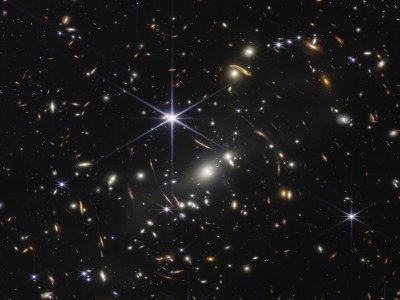
The known universe is 93 billion light years across. To go from one end to the other we would have to travel at 186,000 miles a second for 93 billion years. Let that sink in. If this was made by God in Christ, think how powerful he must be to have done this. And then take on board that his love for you is as powerful as the strength it took to create the universe.
No wonder nothing can separate us from it.
POPULAR ARTICLES

Why Violence Is Declining In The West But There Is No Guarantee It Will ContinueTo

Obama's Covert Wars
The use of drones is going to change warfare out of all recognition in the next decades.

Through A Glass Starkly
Images of traumatic incidents caught on mobile phone can be put to remarkable effect.

What Are British Values?
Is there a British identity and if so, what has shaped the values and institutions that form it?